Whenever you do get the opportunity to spend time in a country where they speak the language you’re learning, you want to make the most of it. A little preparation can go a long way in making your experience a very memorable one.
You should try and prepare a list of things to say, and where you’re going to use them. This list needn’t be an endless list; just five or six things to start with is perfect. Write down sentences with things that you know you’ll use, and then spend a day or so before your holiday reading them out loud to get your tongue around them.

“The food here is always absolutely delicious”
You could say this if there’s a particular restaurant you go to a few times.
I’ve used this one plenty of times, and have often found myself with a free drink or a dessert on the house because of it!
“I would like the chicken for me and the paella for him, please”
This sort of sentence is always useful and can be modified easily.
Once you memorise the construction, you’ll be able to rattle it off with no problems.
“Do you have any cheese?”
Again, this is another one of those sentences that can be changed easily.
You can change “cheese” to anything, but the question structure remains the same.
All of these sentences are things that could use to start a mini-conversation with somebody. It doesn’t really matter if you don’t quite understand everything or even anything of what’s being said back to you. The more you listen, the more your ear will tune into the language. There were many times when I first learnt a language where I had no idea what was being said to me in a conversation. I often felt deflated that I couldn’t understand, but every time I had a conversation, it got me a little step closer to where I am now. I had to go through lots of failed conversations to achieve fluency.
You should make sure you take every opportunity to speak, no matter what. Even if, in your own language, you wouldn’t say something, you should say it in the foreign language. You might know where the toilet is in a restaurant, but that doesn’t mean you shouldn’t ask the waiter where it is anyway. You might not think the food was “absolutely delicious” but it’s better to say that when the waiter asks if your meal was OK than just saying “yes”.
The more you speak as soon as you arrive in the foreign country, the easier it will get because your confidence will begin to grow. Even just a few days spent abroad will do wonders for your language skills.
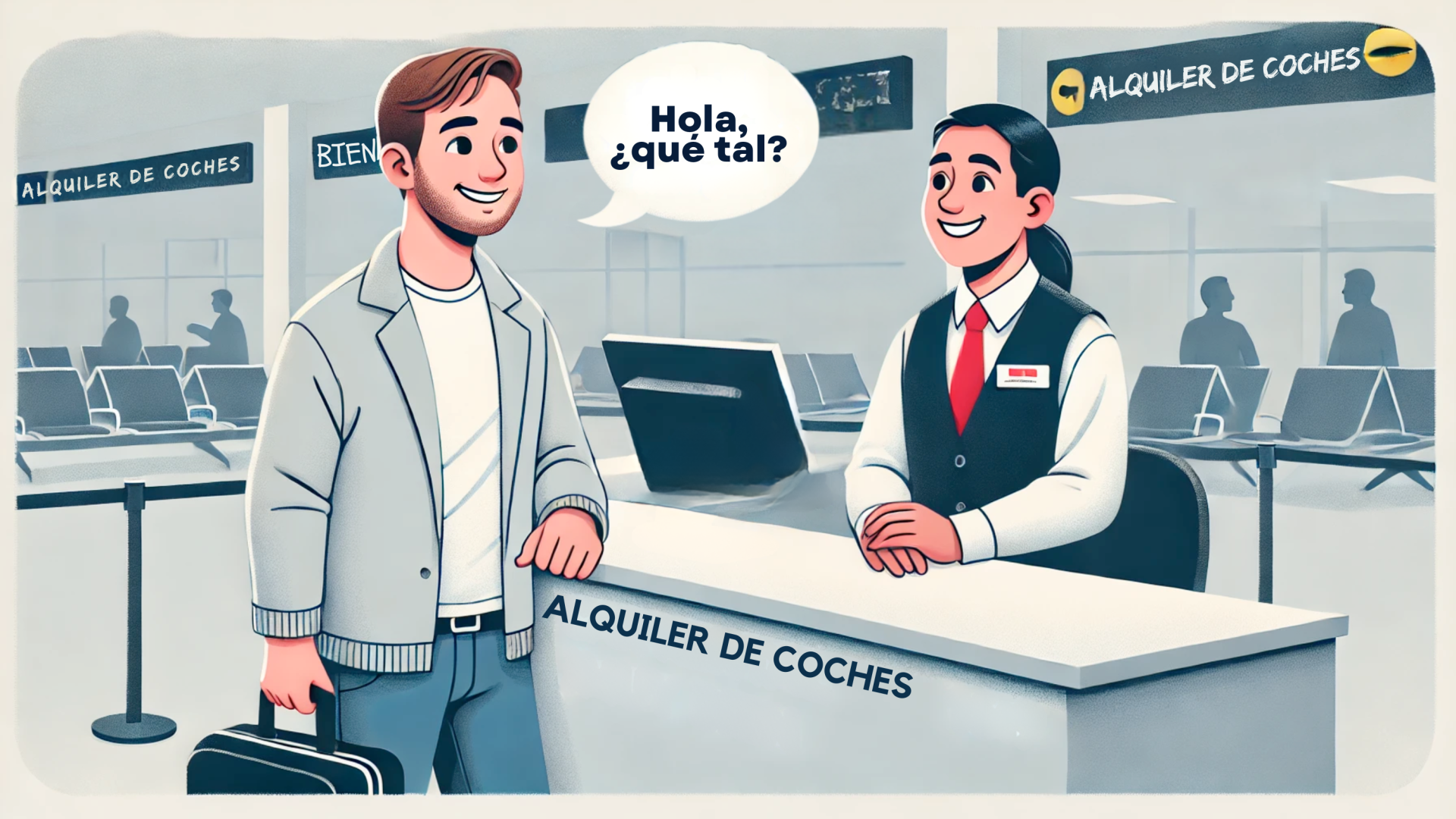
One man I taught told me that he was so nervous on the plane journey to Spain. He was really panicking because his wife was expecting him to speak lots of Spanish, but his nerves made him think he was going to fail.
He said as soon as he got to the airport, he went straight to the car rental shop without his wife and said, “Hola, ¿qué tal?” to the lady at the counter. This means “Hello, how are you?” in Spanish. He said the lady looked up and smiled and said, “muy bien” meaning “very well.” He was so elated that he had spoken Spanish that he booked the car completely in Spanish, and then couldn’t wait to talk to somebody else. His confidence was boosted just by that first little utterance, and his wife told me that he was speaking Spanish to anybody who would listen after that!
So, speak the foreign language the moment you arrive, and speak to anybody who will listen. Speak to airport staff, speak to shopkeepers, housekeeping staff, hotel receptionists, pool cleaners, anybody. The more you speak, the better you’ll get.